
On the 22nd of April, we organised a panel at the Classical Association Annual conference at Cambridge. It was great to see so many members and other interested people there.
The first talk was an introduction to the work of the Classical Collections Network, given by Vicky Donnellan. She explored the reasons we were founded and the work we do. Vicky announced the good news that the Classical Collections Network has been successful in our application to become a Charitable Incorporated Organisation (CIO) and how this will enable us to pursue more ambitious projects. She closed by noting how vibrant the current context is, with three separate exhibitions in the UK this summer exploring elements of the classical world and more on the way.
This was followed by an informal discussion between Arlene Holmes Henderson and Suzanne Turner about how their Every Body is a Classical Body project came about. They explored how talking about casts with young people could be a way of safely exploring difficult issues around body image and identity. They discussed some relatable experiences of trying to get a project off the ground and practical tips for turning an exciting idea into a working project, learning as you go.
Turning to the history of museums, and how it affects us today I gave a paper on my work on Heinrich Schliemann’s first museum exhibition. I showed how Schliemann presented racial theory (including skull measuring and the study of swastikas) as a subject for his audience to debate and apply to contemporary concerns. While the specific nineteenth century preoccupations with skulls and symbols have passed, archaeology is still called on to offer meaningful accounts of east and west, identities and origins, and we need to attend to the historical and political implications of such work.

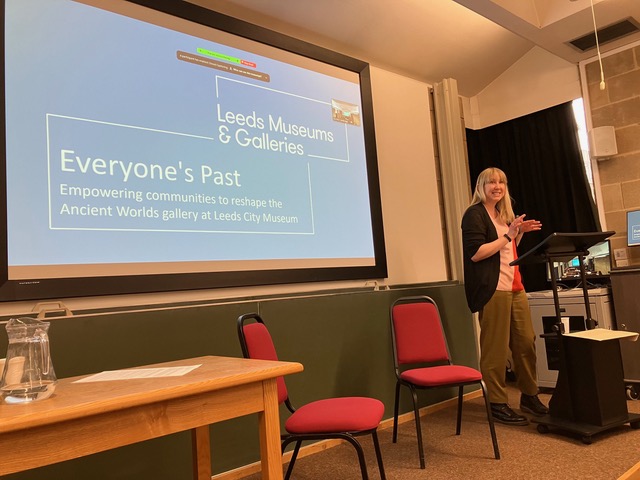
Finally, Kat Baxter presented early work at Leeds to re-evaluate the displays of the City Museum in the light of increased visitor interest in where collections have come from. She discussed how they are taking the opportunity to consult visitors about new approaches to interpretation while some star objects are on loan. They have put a visually engaging consultation display in the spot in the gallery where the Lanuvium marbles usually sit, while they are on loan to the National Archaeological Museum in Naples.
There was some great discussion about the active role of visitors (past and present) in questioning and debating museum exhibitions and a chance to socialise afterwards. Thanks for everyone who came along and shared their thoughts and ideas, we look forward to seeing you again at future events!
 Classical Collections Network