
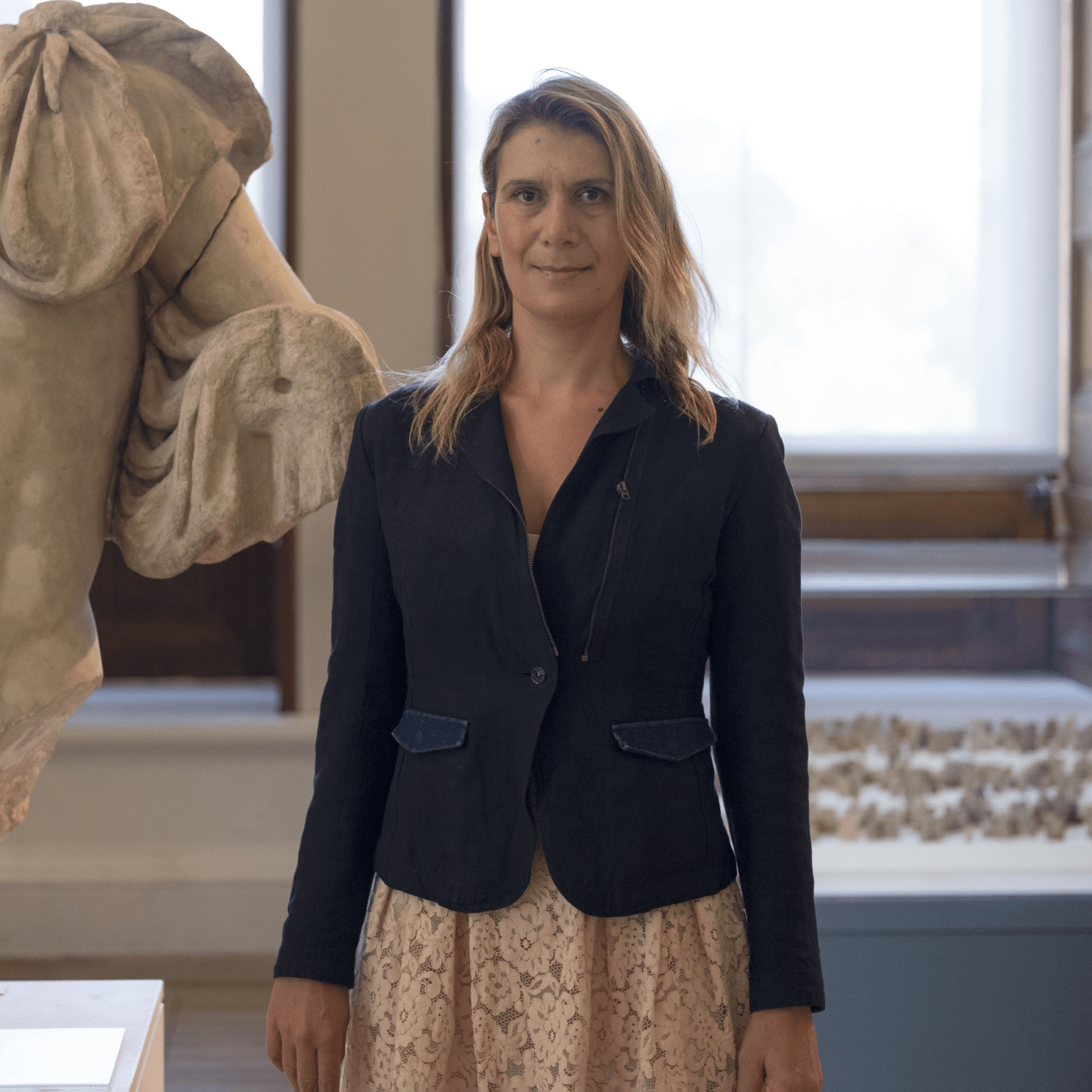
Meet the member: Dr. Anastasia Christophilopoulou, Senior Curator Ancient Mediterranean, the Fitzwilliam Museum
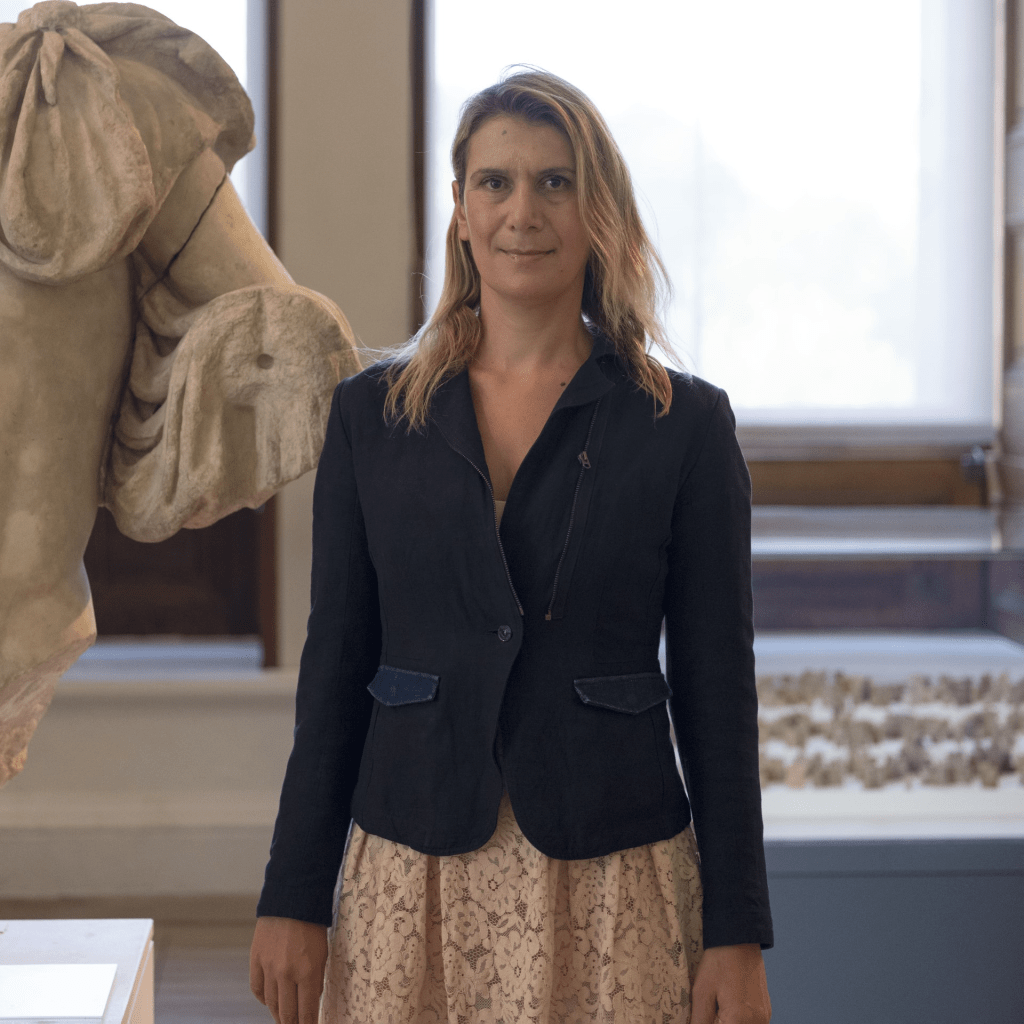
What classical collections are you involved with?
I am involved with collections of the Mediterranean world at the Fitzwilliam Museum, namely the collections of ancient artifacts from Greece, Italy, Cyprus, and parts of the geographical area defined as ancient Anatolia and the Syro-Palestinian region. It is a widely defined area of the collection, not just in geographical terms, but also in chronological terms as our objects span from around 8000 BCE to 400 CE. We tend to focus on specific areas of the collection, driven by our research needs and ambitions, or wider collaborations with other museums and academic institutions, or specific engagement programs that require in depth research and reassessments of aspects of the collection, for example Classical Greek pottery, Iron age metallurgy, Roman glass production etc.
What is your role in relation to them?
As Senior Curator of Mediterranean Antiquities the Fitzwilliam Museum, I am responsible for research and exhibition projects and permanent displays in the fields of Greek, Cypriot and Roman collections. My (current) core interests are in the collections of the Mediterranean Islands with a wide chronological perspective. My work is really diverse and exciting at the museum, a week’s ‘to do list’ could include teaching undergraduate groups and supervision of doctoral students, researching the collections of Ancient Greece, Rome, and Cyprus, working with our collections management and conservation teams on improving accessibility, storage and management of the collections, or presenting in research seminars and international colloquia on the research themes I lead. I am also very proud of the work we carry out in the field of public engagement as part of our curatorial and research practice. My work at the museum is also enhanced by collaboration with two other academic departments, the Faculty of Classics and the Department of Archaeology and the McDonald Institute in Cambridge.
What are you working on at the moment?
Currently I am focusing on the delivery of the 4-year research project ‘Being an Islander’: Art and Identity of the large Mediterranean Islands (Being an Islander | A research and exhibition website for Being an Islander. (cam.ac.uk) , together with Dr Abigail Baker and a team of specialists ( Our team | Being an Islander (cam.ac.uk) aiming to critically re-examine the concept of island life through material culture. I also engage with questions on cultural identity, mobility, and migration in the ancient world, as well as with anthropological perspectives to interpreting material culture, in relation with the Aegean and Cypriot Bronze Age, Classical Greek and Roman material of the Fitzwilliam collections. I also work on promoting projects that highlight current research challenges in Mediterranean Archaeology, and initiate projects that address issues that hinder the study of the ancient Greek and Roman material cultures, for example, the fact that they rarely appear in comparative material culture studies. I have also worked widely in the fields of public Archaeology and public engagement with the Greek and Roman cultures and heritage (The Fitzwilliam Museum – Material Cultures in Public Engagement (cam.ac.uk) including outputs such as organising international conferences on the topic, the production of an award-winning bilingual documentary (Documentary | Being an Islander (cam.ac.uk) and the creation of an international research network on public engagement and museums, with the participation of institutions from 5 European countries.
What are your priorities for finding out more about the collections?
My priorities lie in researching the complete history of our collections and acquisitions, i.e. how and when they were acquired, by whom, and what research incentives or ideas prompted their discoveries or acquisitions at that time. I am equally interested in this line of research as the fascinating histories of discovery and collecting of these objects, reveal interesting trajectories of our own disciplines (Classical Archaeology, Mediterranean Archaeology, etc). I believe that the two should be studied together.
What is your favourite object, and why?
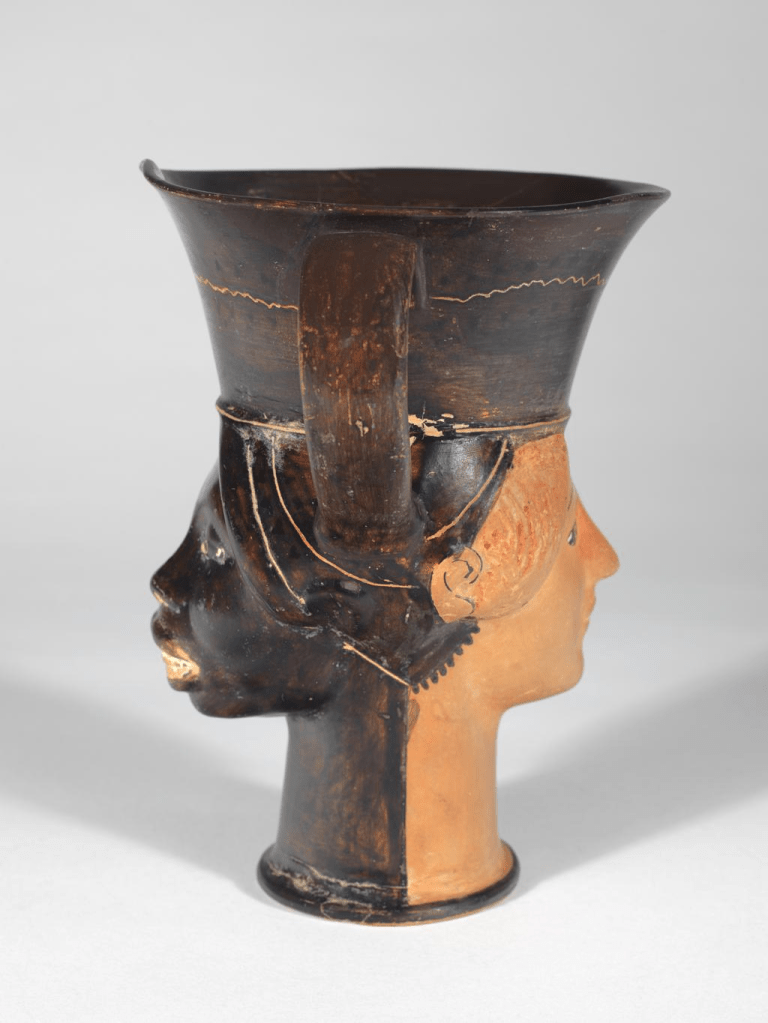
One of my favourite objects in Fitzwilliam’s collections is a Kantharos cup, made in Athens, circa 470 BCE. ( The Fitzwilliam Museum – Kantharos: GR.2.1999 (cam.ac.uk)). The kantharos depicts two human heads, one on each side, with one face painted in a dark glaze and the other in the colour of terracotta; white is used on both faces, but only for details such as the teeth or the eyes. We are intrigued by the exact meaning of this vessel. Two handled kantharoi, were used by the Ancient Greeks for drinking and making offerings of wine. They appear to have been closely associated with Dionysus, who was the god of wine. Double headed kantharoi tend to juxtapose distinctive faces. We see pairings of different colours, of supernatural beings with mortals and of men with women. We know very little about the meaning of these juxtapositions. Depictions of Black people like the woman shown here are relatively common on kantharoi and across Ancient Greek art more generally. Whilst this kantharos doesn’t reveal much about the woman, on other ceramics we see Black people represented as political allies, as co-worshipers, as soldiers, as heroes and as servants.
What would you like to happen with the collections in the future?
What I would like for the Ancient World collections is for them to continue to be researched embracing current questions and research themes in the fields of Mediterranean Archaeology, Heritage studies, Archaeological science, and curatorial practice. I want to make the collections, objects, and their histories relevant to what matters to all of us today, whether that might be their provenance and the way they were acquired, or the context of their archaeological discovery as well as their histories as they navigated through different museums collections from where they currently are. I strive for these research directions to lead to the creation of innovative, immersive, and groundbreaking projects and exhibitions, ones that also ask difficult questions and don’t rely on just the curators/museum professionals to answer them; ones that engage our diverse public audiences to their interpretations. I am also very keen to promote work in the collections that encourages a dialogue between ancient and contemporary material culture, or queer perspectives in ancient art and material culture.
Where can we find out more?
You can find out more on my projects on the research project pages here, for the Being an Islander: Art and Identity of the Large Mediterranean Islands’ (Being an Islander | A research and exhibition website for Being an Islander. (cam.ac.uk), or my previous projects : Re-approaching Ancient Cyprus: (The Fitzwilliam Museum – Re-approaching Ancient Cyprus which was aimed at re-assessing and re-contextualizing the entire Ancient Cyprus Fitzwilliam, and the Material Cultures in Public Engagement project: The Fitzwilliam Museum – Material Cultures in Public Engagement which contributed to the advancement of public archaeology as a theoretical discipline and as a practice within museums.
 Classical Collections Network