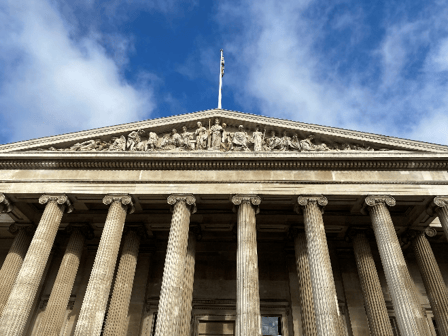
On the 11th September 2026, the Classical Collections Network hosted an Ancient Cypriot Collections workshop at the British Museum, in partnership with the Department of Greece and Rome at the British Museum. Together with Dr Thomas Kiely (A.G. Leventis Curator for Ancient Cyprus) the CCN organised and facilitated the event, and led attendees in an exploration of the world and complexities of Cypriot artefacts. The aim of this workshop was to provide an opportunity for people working with museum collections of Cypriot artefacts to learn how to research collection histories, identify objects, and design museum displays to showcase them.
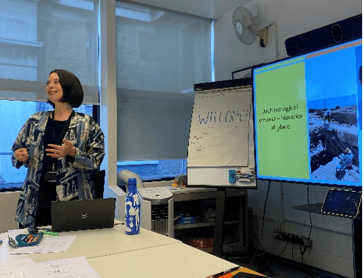
The day began with introductions in the British Museum study room, providing attendees a chance to briefly network before the workshop commenced. Anna Reeve (co-Chair of the CCN) opened the day by providing archaeological context on Cyprus, and illuminating the place of Cypriot artefacts within histories closer to home, explaining the importance of contextualising collections and artefacts within the histories of various museums. In this, she used the examples of Leeds Museum to illustrate how local histories and museum histories can inform us about the reception of various artefacts. In addition, the influence of Cypriot antiquities on contemporary art was illustrated by comparing and contrasting objects from different periods.
Following a short break, we moved on to the artefact handling portion of the morning. The British Museum kindly allowed access to their collections, so that in pairs the participants could handle and explore the pottery hands-on. Thomas Kiely led this part of the workshop and once all participants had an opportunity to handle artefacts, he explained each artefacts’ identity, context, and supposed uses. A highlight of this was being able to see a beautifully intact and elegantly decorated trick-vase in a zoomorphic style.
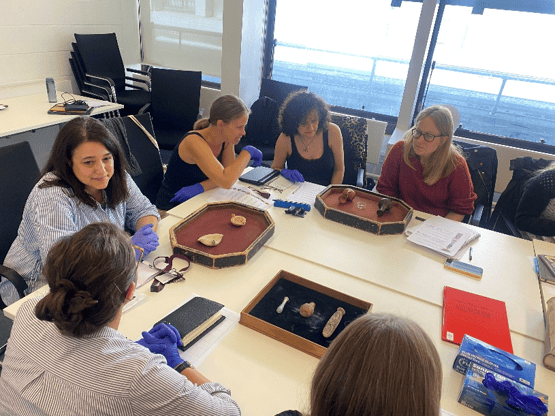
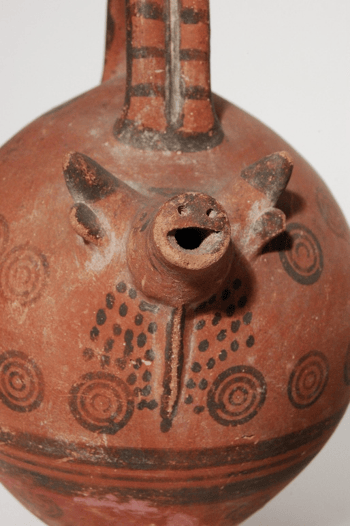
© The Trustees of the British Museum. Shared under a Creative Commons Attribution-NonCommercial-ShareAlike 4.0 International (CC BY-NC-SA 4.0) licence.
Following our lunch break, Anna Reeve then led a session illustrating the histories of collections and how to best research them, explaining how we can use labels, notes, even auction catalogues to help build understanding of histories of objects. This promoted a cohesive discussion on collection histories.
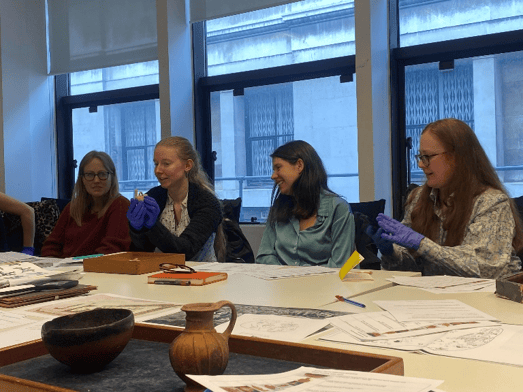
Attendees of the workshop were invited to bring along images of objects in their collections which they wished us to help them identify: Anna and Thomas were able to do so in a way that enabled vibrant discussions on artefact identification and potential ways of showcasing and presenting these artefacts.
This led us into the penultimate segment of the day, where Abi Baker (Membership Secretary for the CCN) and Sally Waite (Newcastle University, Treasurer for the CCN) presented case-studies of exhibits and collections that display Cypriot collections. Firstly, Abi introduced the Islanders: Making of the Mediterranean exhibit and the different display types used to showcase the artefacts, alongside public engagement activity sessions that ran alongside the exhibit. This displayed the education potential held by these artefacts, in terms of how the public responded to the exhibit layout (in the formation of ‘islands’, wherein each island held display cases of different themes, such as ‘food and ritual’) to better engage with the artefacts. Sally Waite then introduced us to the Shefton Collection, housed at the Great North Museum in Newcastle upon Tyne, and the Cypriot artefacts within it. She explained the construction of the gallery where the collection is housed, and how this has benefits and restrictions in terms of how artefacts can be presented and thus engaged with.
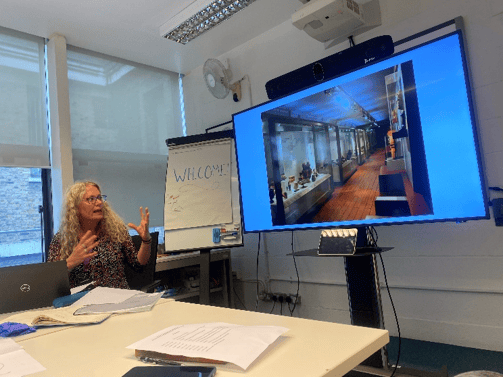
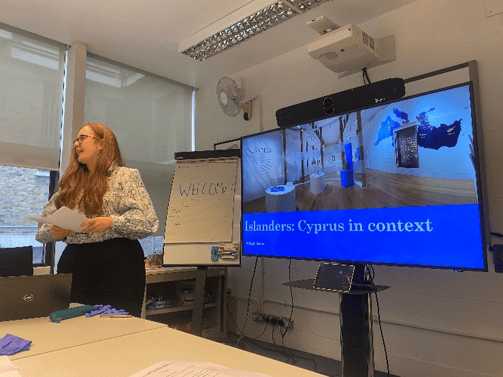
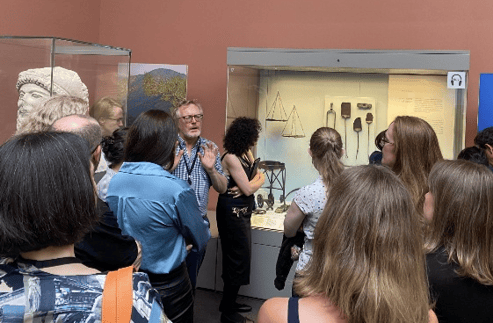
We then retired for a tea and coffee break, before taking a guided tour of the Cypriot gallery, led by Thomas Kiely. In addition to the guided tour, we also had opportunity to explore the gallery ourselves, allowing for a period of reflection upon the events of the day.
Before we retired to the local pub (aptly renamed the ‘Beer Tapestry’ in light of the Bayeux Tapestry exhibit), we were fortunate to hear from John Stokes (British Museum, Head of National Programmes) about the National British Museum partnerships scheme, where the British Museum partners with various galleries and museums around the UK to produce travelling exhibitions.
On behalf of the CCN, we would like to extend our thanks to everyone who made this event possible, especially all who attended. We hope to run more events like this in the future and greatly appreciated the feedback given to us following the events. Many thanks also to British Museum colleagues for hosting the event, managing the handling session, sharing their expertise, providing refreshments and lunch for us, and supporting travel bursaries. It was an excellent opportunity to bring museum professionals together, and we hope to see many of you at the next event!

