
The 19th September 2025 marked the date of the Classical Collections Network conference with the theme ‘Colour, texture and sound: experiencing the ancient world’. Hosted at the Great North Museum in Newcastle-upon-Tyne, the day was filled with exciting papers that detailed the various ways we can engage with the senses to explore and better understand the ancient world. The conference was introduced by Anna Reeve, Co-Chair of the Classical Collections Network, and Malavika Anderson, the Great North Museum: Hancock Manager.
Panel 1, chaired by Anna Reeve began with Andrew Parkin (Great North Museum) presenting the scientific investigations surrounding an Etruscan ostrich egg from the Shefton Collection at the Great North Museum, explaining the way scientific techniques can be used to recover and identify pigments in order to provide insights into the egg’s original decorative scheme. Following this, Rachel Philips (British School at Athens) discussed the use of colour in Mycenaean Greece, presenting various case studies. David Creese (Newcastle University) then shared how one would tune a Panpipe from Roman Egypt, considering how it could be tuned, the note range, and demonstrating how the various melodies were built and altered in different circumstances.
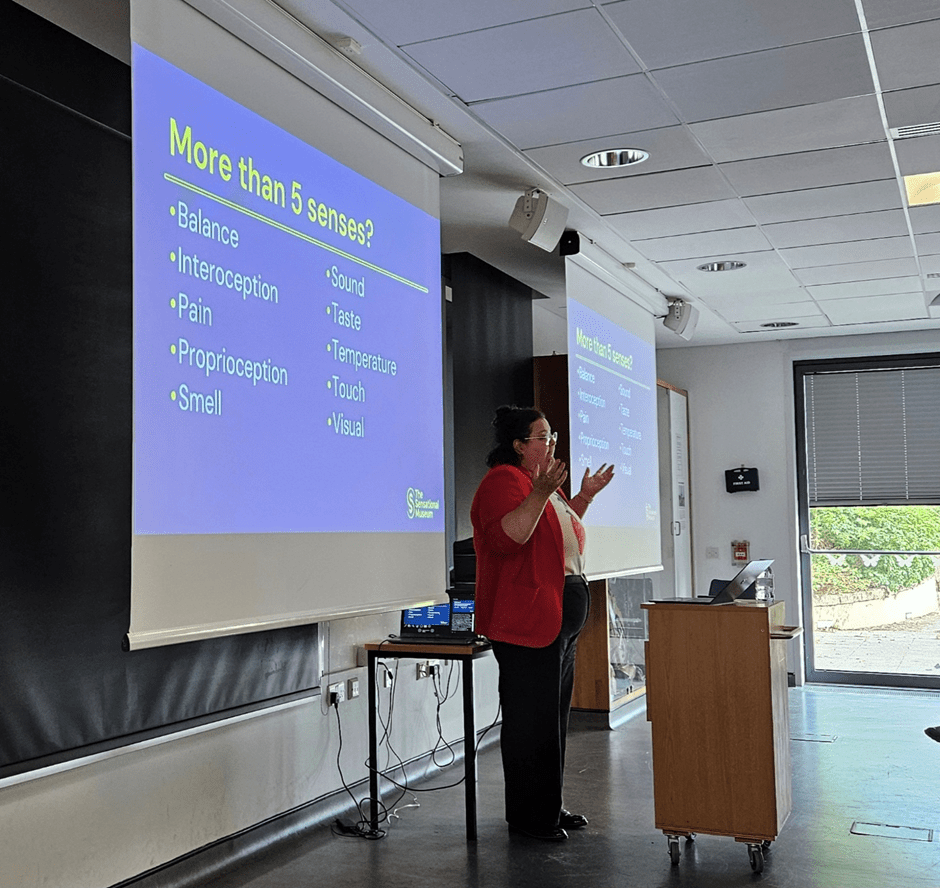
After a short tea break, we turned to the Keynote address by Dr Sophie Vohra (University of Leicester) from the Sensational Museum. Her interactive keynote transported us to a world of the senses and demonstrated the importance of advocating for diversity and inclusion when designing exhibitions, so that everyone can interact with and access artefacts and their histories, through a multisensorial approach.
Panel 2, following a lunch break, was chaired by Emily Jayne Knights (Communications Officer for the Classical Collections Network). This panel began with Janie Masséglia (Leicester University) sharing the Ashmolean Latin Inscriptions project, describing a project involving a reconstructed Roman funerary ritual to allow consideration of how the successes of the event can be interpreted and related to the OCR Classical Civilisation syllabus. Shabnam Balouch (Leighton House, RBKC) then invited us to explore the traditions of Ancient Persia through an interactive exhibit held at Leighton House Museum, where the senses were engaged through the music and scents of various rituals which connect different generations. Andrew Roberts (English Heritage) then shared the successes of a project entitled ‘My Roman Pantheon: embodied interaction with ancient religious stonework’, which facilitated visitor interactions with ancient religious stonework using modern technology provide an immersive Pantheon experience. Arnold Bärtschi (Ruhr-Universität Bochum) closed the panel with his examinations of multi-sensory reconstructions of antiquity in the game Assassins Creed. Another tea break then followed, allowing participants the chance to network and engage with the research we had been presented with so far.
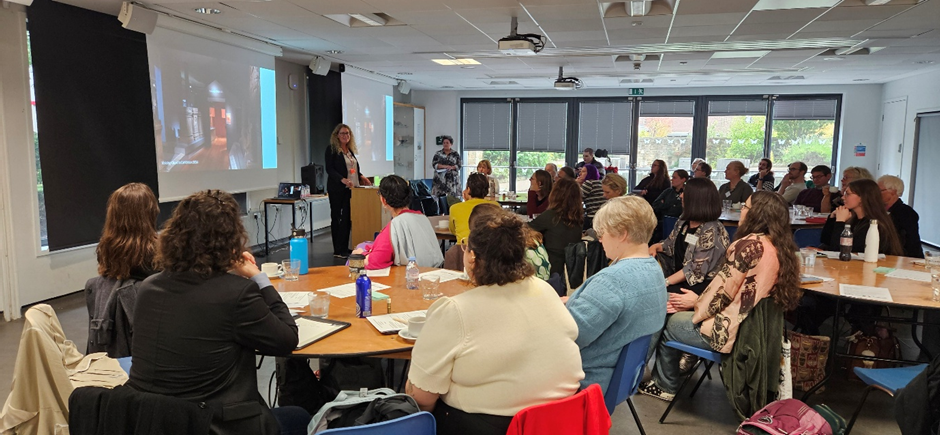
The third and final panel of the day, chaired by Abi Baker (Membership Secretary for the Classical Collections Network) commenced with Pippa Anderson, a clinical vocal rehabilitation expert, and Sally Waite (Newcastle University) presenting their ‘Voicing Objects’ project; an embodied approach to clay artefacts which produced a moving image artwork by Olivia Turner (University of Edinburgh + Newcastle University) which allowed the voices of marginalised women in the ancient world to be heard. Emily Jayne Knights (Newcastle University) then presented her research on the linkages between anatomical votives and illness related to old age in ancient Athens. Finally, Ellie Mackin Roberts (University of Bristol) wove the day to completion presenting her research on the role of girls in the weaving of Athena’s peplos, considering the embodied nature of this devotional practice in relation to the weavers’ ability to create kinaesthetic patterns as part of their ‘endurance’ devotion.
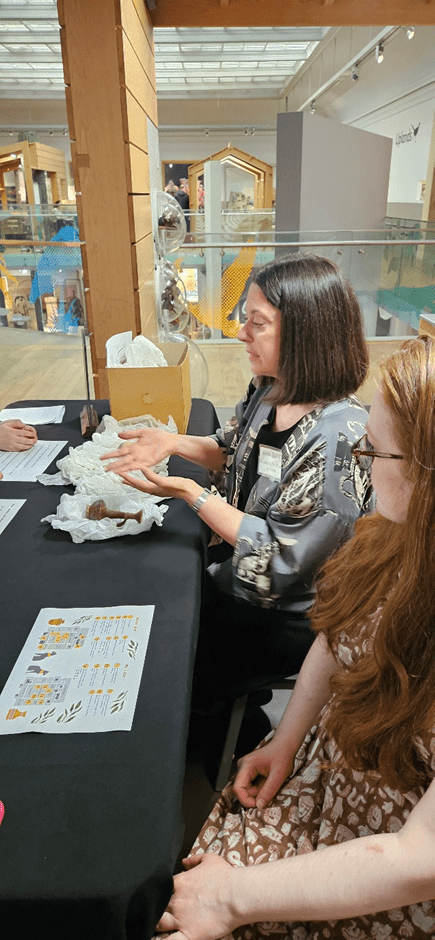
Following the daytime conference was an evening event held at the Great North Museum that facilitated exploration of the various collections. A variety of interactive sessions were held, including a scent tour of an ancient Greek marketplace, ancient Cypriot pottery handling, and an opportunity to interact with ancient musical instruments. Many thanks to the hosts, organisers and everyone who attended for a wonderfully informative day enjoyed by all that explored a variety of sensorial themes. We would also like to extend our thanks to the funding provided by the Hellenic Society and Newcastle University that allowed this event to take place, and the Great North Museum for hosting the event.
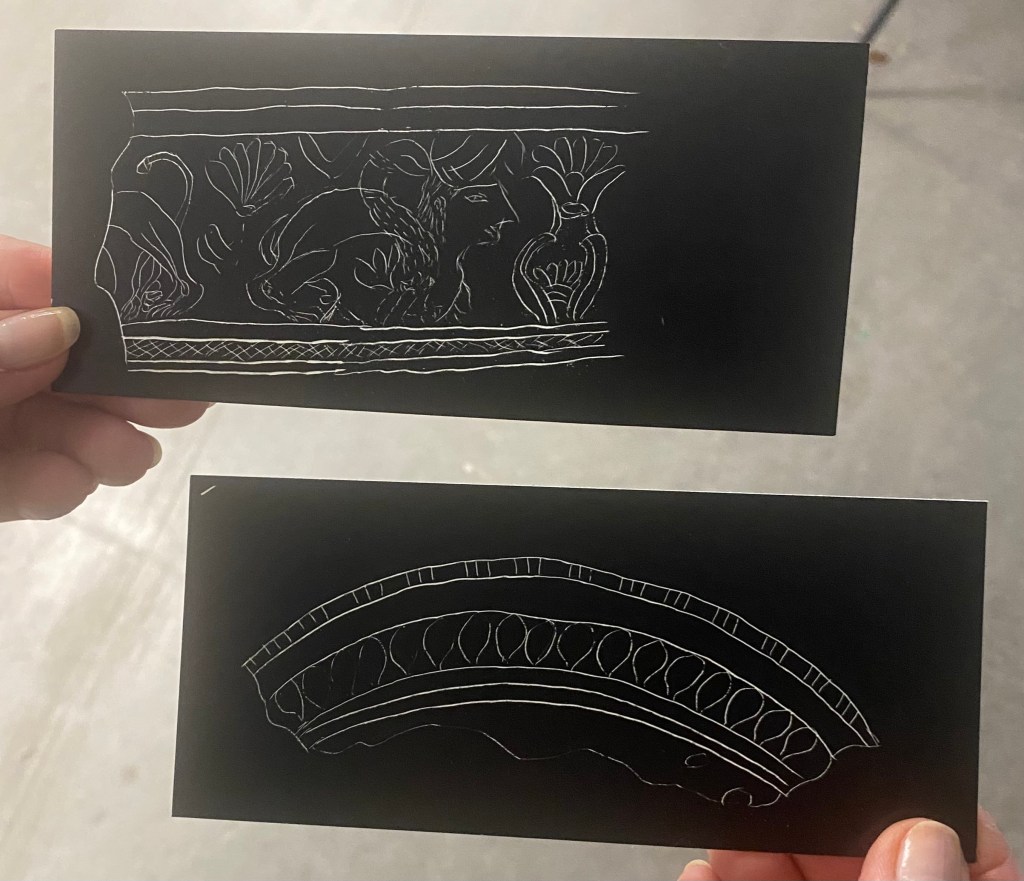
For more information on some of the projects presented at this conference, please see the below links.
The Sensational Museum – The Sensational Museum
The Ashmolean Museum – ashmolean.org
Warwick University – warwick.ac.uk
 Classical Collections Network